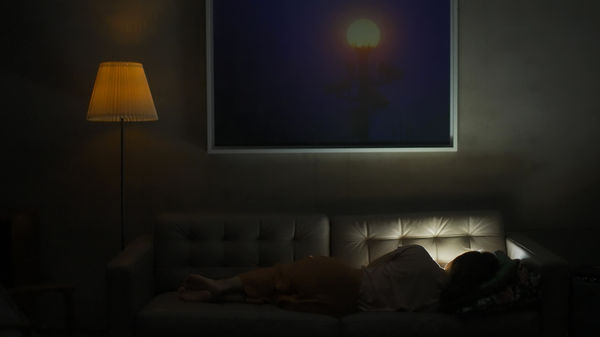
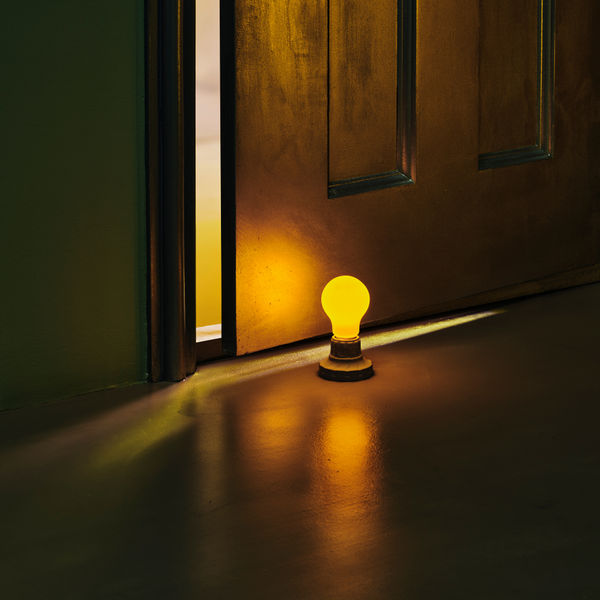
Chen Wei’s solo exhibition “Surplus Lotus” will be presented across two distinct spaces in Kyoto: ARTRO, a gallery housed in a converted storehouse over a century old, and Manshu-in Temple, a historic monzeki. At the heart of the exhibition is Manshu-in, a new photographic series created by Chen over his repeated visits to Kyoto, with the temple itself serving as the setting for the photographs. The exhibition offers a special opportunity to encounter these works in the very place where they were made, and to experience how the scene before our eyes is transformed into art through the artist’s lens. The four works in this series will be split between the two venues, alongside recent photographic series, LED sculptures and video works.
-
-
Chen Wei, one of the leading Chinese artists of his generation born in the 1980s, presents his solo exhibition ‘Surplus Lotus’ across two distinct venues in Kyoto: ARTRO, a gallery converted from a warehouse built over a century ago, and Manshu-in, a monzeki temple. The exhibition title is inspired by the “lotus fruit” in Homer’s epic poem The Odyssey, which has been adapted into a widely discussed Hollywood film this year. In this ancient Greek tale, those who eat the lotus fruit lose their memories and desire to return home. The lotus itself also holds special significance in Buddhism and other Eastern cultures. Drawing on the convergence of these distinctive histories and cultures, Chen sets out to explore themes of memory, perception, the present day and reality. The four new works will be shown across the two venues, alongside recent photographic series, LED sculptures and video works.
-
Manshu-in Series
For Chen, photography is one of his main mediums, through which he recreates cityscapes he has encountered as sets in his studio, photographing them to create a worldview suspended between reality and unreality. For his new series Manshu-in, however, Chen worked on site at the temple over several visits. Manshu-in has many rooms decorated with historic works of art. Chen then placed lemons, peaches and grapes in these rooms and photographed them. The presence of fresh, fragrant fruit resting in a place steeped in rich cultural history brings to mind Lemon by Motojiro Kajii, a writer Chen greatly admires. By viewing the works in the very place they were made, visitors can experience how the artist’s perception transforms the scene before them into “reality” and “unreality”.
-
-
-

Photo: Takeru Koroda. Courtesy of Manshu-in Temple
-
-
-
Hypnotic Rain and Light Me
In Hypnotic Rain, raindrops trickle down a windowpane on a soft fabric screen, accompanied by the sound of rain that fills the space. Modelled on the ASMR sleep-aid videos widely found online, the work presents an endless loop of imagined rain and soothing sounds, inviting the viewer to keep watching. Yet this very appeal reveals a paradox: in searching online for a cure for insomnia, people only sink deeper into the digital world. At first glance, the video installation Light Me looks like a photograph in a lightbox. Only after watching for a while does one notice the image subtly changing. The work depicts a lone figure gazing at a computer or a smartphone screen, while the viewer, in turn, gazes at this slowly changing image. Between them flows a time akin to meditation. Shown in Kyoto, these two video works question the solitude and way of life of individuals today, who drift between the world on the screen and the real world.
-
At a time when images on our screens are constantly generated, edited and given new meanings, memory and perception become entangled with algorithms, while reality itself is continually reshaped through all kinds of image processing. Against this backdrop, the exhibition seeks to return to “experience”, something that exists within images yet can never be fully contained by them. In this special exhibition, works in different media speak to one another and come into conversation with history, culture and nature. We warmly invite you to visit as the autumn colours begin to arrive in Kyoto.
-
Also on view
-
-
About the artist
Born in Zhejiang, China in 1980, Chen Wei is based in Beijing, China and Tokyo, Japan. His solo exhibitions include “Rehearsal in the Mist”, G Museum (Nanjing, 2026), “I Am the People”, White Rabbit Gallery (Sydney, 2023), “Make Me Illusory”, West Bund Museum (Shanghai, 2021), “Where Are You Going Tonight”, chi K11 art space (Guangzhou, 2018) and “Noon Club”, JNBY Foundation (Hangzhou, 2015). His works have been included in group exhibitions such as “目 China. A new generation of artists”, Centre Pompidou (Paris, 2024), “TOP Collection: The Resonance of Seeing”, Tokyo Photographic Art Museum (Tokyo, 2024), “Collection Exhibition: Scales”, 21st Century Museum of Contemporary Art (Kanazawa, 2020) and “The 12th Gwangju Biennale: Imagined Borders”, Asia Culture Center (Gwangju, 2018). His works have been acquired by Tokyo Photographic Art Museum (Tokyo), 21st Century Museum of Contemporary Art (Kanazawa), Centre Pompidou (Paris), K11 Art Foundation (Hong Kong), M+ Sigg Collection (Hong Kong), San Francisco Museum of Modern Art (San Francisco), Singapore Art Museum (Singapore) and UBS Collection (Switzerland).
-
Venues
-
-